

Catalan: more than a language: a tool for cohesion and identity

28.02.2025
Around 150 people are enjoying Catalan courses at the Ateneu this autumn
Since this autumn, around 150 people have been taking part in the various Catalan classes held at the Ateneu.
Given the high demand for Catalan classes and the challenge of creating bonds that help integrate newcomers in Catalonia, the Ateneu launched a program of classes for new Catalans with three different proposals.
On one hand, there is a collaboration with the Salud Sense Sostre association, in partnership with the Hospital de Campanya of Santa Anna Church. Seven homeless people (from Latvia, Ukraine, Romania, Morocco, and China) have been attending Catalan classes every Saturday since September with Noemí Ribera and Rosario Ribera. “When I see them, it reminds me of the old-school concept where students of different ages shared the same classroom. The classes go far beyond language; we explain the traditions of our country and work on group integration,” explains Jordi Delàs, a doctor, Ateneu member, and participant in the activity.
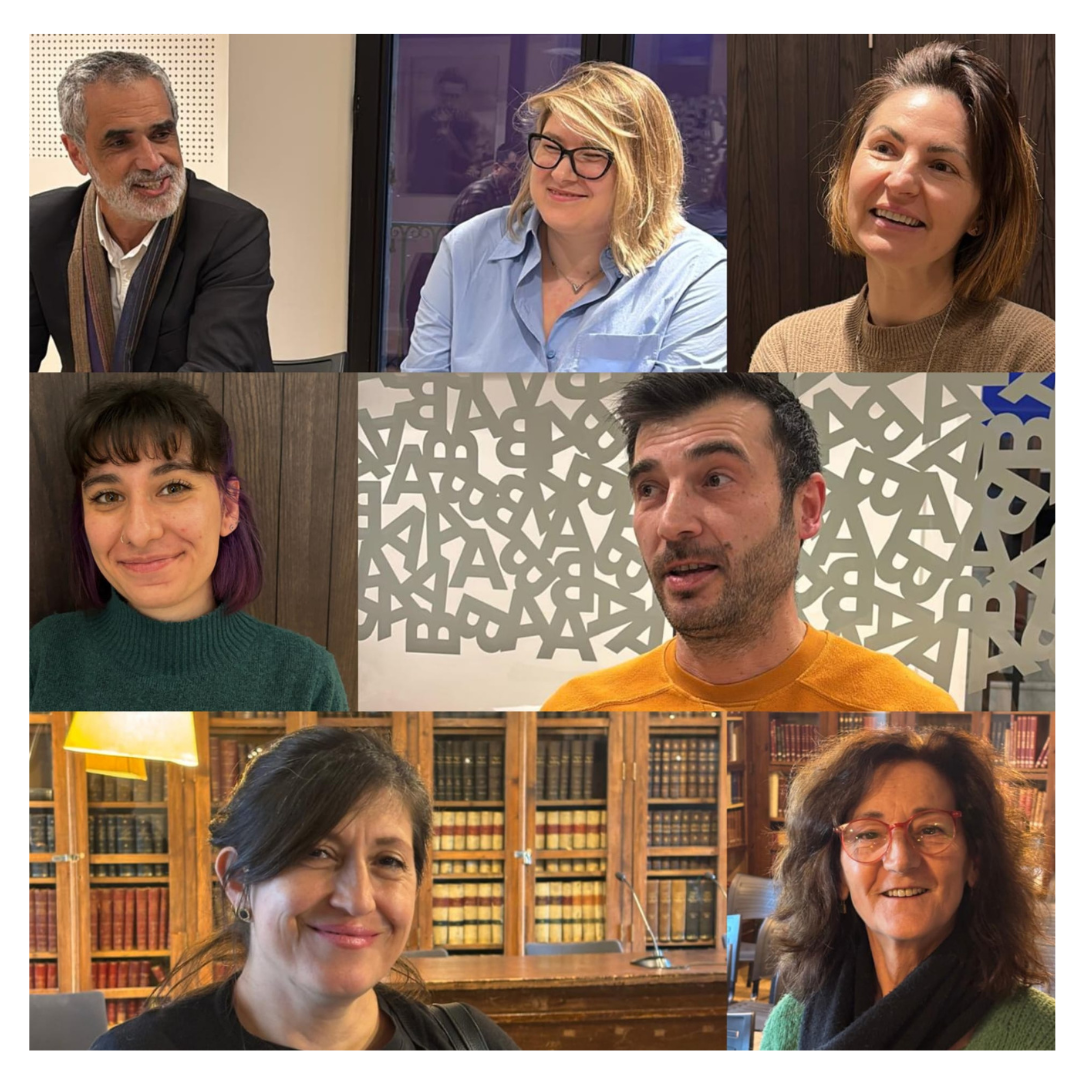
Another activity related to Catalan classes at the Ateneu is the continuation of group lessons. The high demand at the Consorci per a la Normalització Lingüística (CNL) led the Ateneu to offer classes to different groups, involving a total of 80 participants. “If you live in Catalonia, it can be better for your daily life to know Catalan: to go shopping, talk to your neighbors, and speak the language of the place where you live,” explains Cristina Pacheco, from Madrid and a student of a CNL course.
Another CNL student, Carmen Pintor from Galicia, says she had always liked Catalan but felt shy speaking it with adults, though not with children. “It’s important to know the language of the place where you live and not switch to Spanish out of fear of not being understood. When I had a jewelry store in Barcelona and started speaking Catalan, people would reply in Spanish, but I always asked them to continue speaking in Catalan,” explains Pintor.
Karina Hidrovo, from Ecuador, moved to Catalonia two years ago. For her, learning Catalan is important both because she likes the language and because she sees it as essential for integration in her new home. “If you live in a place where a language is spoken that is not your own, out of respect, I believe you should speak the language of the country,” she emphasizes.
Finally, and equally important, with the collaboration of David Jou, El Club del Català was created, offering nine learning groups (three in-person, six online, and eight students taking individualized classes), totaling 60 students. “I have students from Russia, Ukraine, and Israel, and we would like students from all nationalities to join,” highlights Jou.
Beyond classes, participants have also gone on outings to the TNC (National Theatre of Catalonia), the Picasso Museum, and enjoyed a calçotada together. Pavel Putinster, a student, says he enjoys it when Catalans are surprised to see that he is not studying Spanish.
El Club del Català also has seven language partners, formed by members and students. Valeriia Smirnova from Russia explains: “I enjoy meeting Catalan people, learning about their culture, and I think learning a language is the best way to do it. I’ve always spoken Russian and English with my surroundings, and having a language partner helps me speak Catalan.”
Agustí Grau, an Ateneu member and Valeriia’s language partner, says that language partnerships “are a great initiative, especially when Catalan is at risk. If people come to our country and have this interest, it seems very important. Valeriia and I have gone to Poblenou for a beer, visited a bookstore to show her catalogs of books in Catalan, and she has told me about Russia and the current situation there.”
Finally, Yuliia Plowka from Ukraine, also a student at El Club del Català, states: “Learning Catalan is like a game; I enjoy discovering the language, and it’s another opportunity in life that I would never think to refuse.”
The classes are open, and at the Ateneu, our challenge is not only to teach the language but also to reach as many students as possible, linking them to our country through our activities.
El Club del Català is expected to continue growing.